


What Does a Good Workplace Safety Program Look Like?
What does an effective workplace safety program look like? It goes beyond compliance checklists and annual training. Discover seven essential elements that help organizations identify hazards, protect employees, strengthen safety practices, and continuously improve. Learn how to evaluate your current program and identify opportunities to build a safer, more prepared workplace for everyone on your team.

Four Foundational Elements of an Effective Workplace Safety Program
An effective workplace safety program goes beyond written policies and annual training. OSHA identifies seven core elements that help organizations prevent hazards, protect employees, and continuously improve safety practices.
Here are four foundational elements every organization should prioritize.
1. Management Leadership
Workplace safety starts with leadership. When management makes employee protection a priority, it establishes expectations throughout the organization.
Effective leadership includes:
-
Establishing clear safety policies and goals.
-
Providing resources for training, equipment, and hazard prevention.
-
Assigning safety responsibilities and leading by example.
A strong safety culture starts with leadership commitment—not just compliance requirements.

2. Worker Participation
Employees often recognize hazards first because they work directly with equipment, materials, and processes.
Encouraging employees to report hazards, participate in inspections, and provide feedback helps organizations identify risks that might otherwise go unnoticed.
Employees who actively participate in workplace safety help create safer working conditions for everyone.
3. Hazard Identification and Assessment
Identifying hazards before incidents occur is essential to a proactive safety program.
Regular workplace assessments should include:
-
Inspecting equipment, machinery, and work areas.
-
Reviewing incidents, near misses, and employee concerns.
-
Evaluating new hazards when processes or equipment change.
The goal is to identify risks early and take corrective action before injuries occur.
4. Hazard Prevention and Control
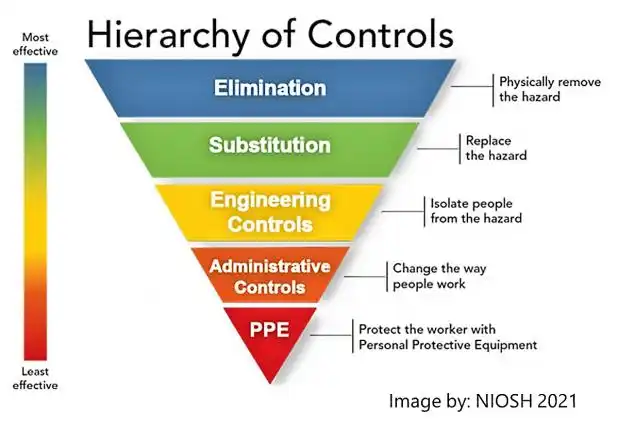
Once hazards are identified, organizations must implement appropriate controls to eliminate or reduce exposure.
The Hierarchy of Controls prioritizes five methods:
-
Elimination: Remove the hazard.
-
Substitution: Replace it with a safer alternative.
-
Engineering Controls: Isolate employees from the hazard.
-
Administrative Controls: Reduce exposure through procedures and work practices.
-
PPE: Provide appropriate protective equipment when needed.
PPE plays an important role, but it should complement—not replace—more effective hazard controls.
Building a Stronger Workplace Safety Program
Leadership commitment, employee participation, hazard assessments, and effective controls provide the foundation for a safer workplace.
At Advanced Safety & Industrial Supply, we help businesses strengthen workplace safety through safety assessments, employee training, compliance support, and industrial safety solutions.
Is Your Workplace Safety Program Actually Working?
Building a safety program is only the beginning. Discover how ongoing training, regular evaluations, and effective communication help keep it working.
Ready to strengthen your workplace safety program?
Explore our Workplace Safety Services to learn how our team can help you identify hazards, address safety challenges, and protect your workforce.
Continue reading: Is Your Workplace Safety Program Actually Working? Discover seven practical questions to help evaluate your program and identify opportunities for improvement.


