


How Often Should Supplied Breathing Air Be Tested?
Employees using supplied-air respirators depend on the quality of the compressed air entering their respiratory system. But how often should that air be tested? Learn what OSHA requires for Grade D breathing air, why there isn't one testing interval for every system, and what factors should help determine an appropriate testing schedule.
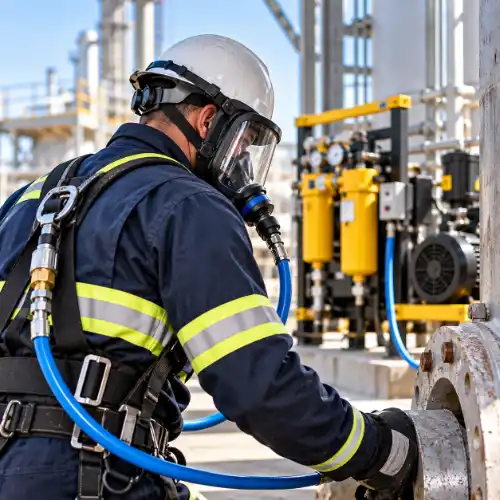
When employees rely on supplied-air respirators, the quality of the air entering that respirator matters just as much as the respirator itself.
Compressed breathing air can be affected by contaminants, moisture, compressor conditions, filtration performance, and changes within the air-supply system. That raises an important question for safety managers:
How often should supplied breathing air be tested?
The answer isn't simply “once a year” or “every six months.” Understanding what OSHA requires—and what factors should influence your testing schedule—can help you maintain a more effective breathing-air quality program.
What Is Supplied Breathing Air?
A supplied-air respirator (SAR), sometimes called an airline respirator, receives breathing air from a source separate from the surrounding work environment. Depending on the system, that source may include a compressor, compressed-air cylinder, or another approved breathing-air supply.
Unlike an air-purifying respirator that filters contaminants from the surrounding workplace air, a supplied-air respirator delivers breathing air to the worker from an independent source.
That makes the quality of the supplied air a critical part of the respiratory protection system.
What Does OSHA Require for Compressed Breathing Air?
OSHA's Respiratory Protection Standard requires employers to provide employees using atmosphere-supplying respirators with breathing gases of high purity. Compressed breathing air must meet at least the requirements for Grade D breathing air.
Grade D breathing air includes:
- Oxygen: 19.5%–23.5%
- Carbon monoxide: 10 ppm or less
- Carbon dioxide: 1,000 ppm or less
- Condensed hydrocarbons: 5 mg/m³ or less
- No noticeable odor
These requirements are important because breathing-air quality cannot always be evaluated by sight or smell alone. Contaminants such as carbon monoxide may be present without providing an obvious warning to the worker.
For facilities using supplied-air respirators, verifying breathing-air quality is an important part of maintaining the respiratory protection system and helping ensure the air delivered to employees meets applicable requirements.
How Often Should Supplied Breathing Air Be Tested?
There is no single OSHA-required testing interval that applies to every supplied breathing-air system.
OSHA has explained that breathing-air systems and their frequency of use vary considerably, so one testing schedule will not be appropriate for every workplace. For a new breathing-air system, OSHA has advised testing more frequently at first to establish a baseline for the air-purification components. Once that baseline is established, the testing frequency can be adjusted based on the system and factors such as the service life of the purification media.
Some facilities choose to test their breathing air on a quarterly or semiannual schedule as part of their respiratory protection program. Other standards or industry-specific requirements may also establish testing frequencies that apply to a particular operation.
The important distinction is that a routine testing schedule should be based on the breathing-air system, how it is used, applicable standards, equipment requirements, and workplace conditions—not on the assumption that OSHA requires the same testing interval for every facility.
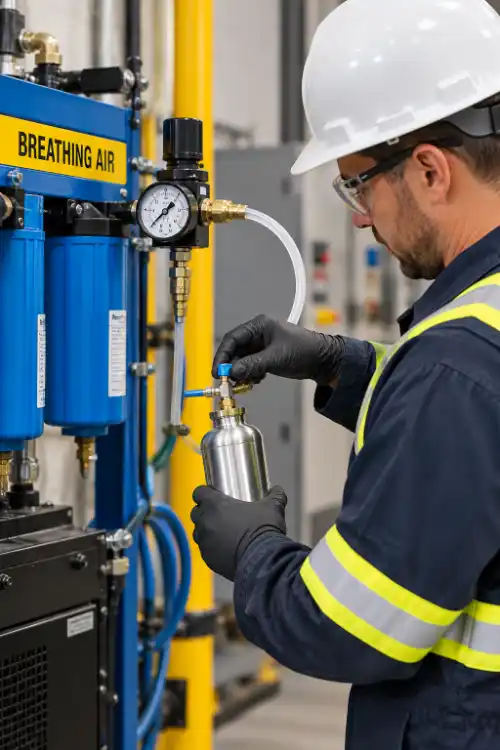
What Should Determine Your Testing Schedule?
Because every breathing-air system and workplace is different, testing frequency should reflect the actual equipment, operating conditions, and respiratory protection program rather than relying on an arbitrary calendar date.
Factors to consider when establishing a testing schedule include:
- How frequently the breathing-air system is used
- Compressor type and condition
- Filter and sorbent service life
- Manufacturer maintenance recommendations
- Compressor intake location and surrounding conditions
- Previous breathing-air test results
- Changes made to the compressor, filtration, or air-supply system
- Industry-specific standards or requirements that may apply
Regular testing also provides something a single test cannot—a history of breathing-air quality over time. Maintaining those records can help safety teams identify changes in system performance and determine whether the current testing and maintenance schedule remains appropriate.
When Should You Consider Additional Testing?
A routine testing schedule provides an important baseline, but certain changes or concerns may justify testing the breathing air before the next scheduled interval.
Consider additional testing when:
- A new breathing-air system or compressor is placed into service
- Significant maintenance or repairs are performed
- Filters, sorbent beds, or other purification components are changed
- The compressor or air intake is relocated
- Workplace conditions around the air intake change
- Contamination of the breathing-air supply is suspected
- Previous test results indicate a potential air-quality concern
The key is to consider whether something has changed that could affect the quality of the air being delivered to employees. Testing after significant system or environmental changes can help identify problems before workers depend on that air for respiratory protection.
Testing Is Only One Part of Breathing-Air Quality
Breathing-air testing provides an important snapshot of air quality, but maintaining a safe supplied-air system involves more than collecting a sample.
OSHA also establishes requirements for compressors used to supply breathing air. Systems must be designed and positioned to help prevent contaminated air from entering the air supply, and in-line purification filters and sorbent beds must be maintained and replaced or refurbished according to the manufacturer's instructions.
For oil-lubricated compressors, additional safeguards are required to address the potential for carbon monoxide in the breathing-air supply. Depending on the system, this includes high-temperature alarms and/or carbon monoxide monitoring.
Together, proper equipment maintenance, filtration, monitoring, and periodic air-quality testing help support the integrity of the breathing-air system and protect employees who depend on it.
Don't Assume Your Compressed Air Is Breathing Air
Compressed air may be used throughout a facility for tools, equipment, cleaning, and production processes—but that does not automatically make it suitable for breathing.
When compressed air is used with supplied-air respirators, employers need to verify that the air meets the applicable breathing-air quality requirements. The condition of the compressor, filtration system, air intake, maintenance practices, and surrounding environment can all affect the quality of the air delivered to the worker.
A documented testing program can help facilities verify breathing-air quality, identify changes in system performance, and maintain records over time as part of their respiratory protection program.
For employees who depend on supplied air for respiratory protection, breathing-air quality should be verified rather than assumed.
If your facility needs to verify the quality of compressed air used for supplied-air respirators, Grade D breathing-air testing can help determine whether the air meets applicable quality requirements.
Need Help Testing Your Supplied Breathing Air?
Advanced Safety & Industrial Supply provides Grade D breathing-air quality testing services to help facilities evaluate compressed air used with supplied-air respirators.
Whether you're establishing a testing schedule, verifying an existing breathing-air system, or responding to a concern about air quality, our Safety Services team can help you determine the appropriate next steps.
Learn more about our Grade D Air Quality Testing Services or contact our Safety Services team to discuss your application.
Additional Resource: For more information about establishing a compressed breathing-air testing schedule, read Trace Analytics’ article, How Often Should I Test My Compressed Breathing Air?



