


OSHA’s #5 Most Cited Violation of 2025: Respiratory Protection (1910.134)
Falls remain the leading cause of workplace fatalities, and inadequate training continues to be a top OSHA citation. Learn what’s missing from most fall protection programs, how to meet 1926.503 training standards, and how Advanced Safety & Industrial Supply can help your team stay compliant and safe on the job.



Why Respirator Compliance Still Lands in the Top 5 — and What You Must Do
When it comes to industrial safety, respiratory hazards often fly under the radar — unless it's too late. In FY 2025, OSHA issued 1,953 citations under 1926.134, placing Respiratory Protection firmly at #5 on the Top 10 list — despite a significant drop of 906 citations from the previous year.
For safety professionals like Steve, procurement leads like Alex, and operations managers like Pete, this violation underscores an important truth: even when respirators are supplied, the program behind them often falls short. Without fit-testing, medical evaluations, and proper documentation, you’re at risk.

Why Respiratory Protection Is Still a Major OSHA Target
Here are the recurring issues OSHA finds during inspections:
✅ No Written Respiratory Protection Program
OSHA requires a formal program that includes:
-
Medical evaluations
-
Fit testing (qualitative or quantitative)
-
Training on use, limitations, and maintenance
-
Periodic evaluation of program effectiveness
If your site has respirators but lacks this program, you're prone to citation.
✅ Missing or Expired Fit Testing
Fit testing must occur:
-
Before first use
-
Annually
-
When the device changes
Many employers skip this step or lack documentation.
✅ Using the Wrong Respirator for the Hazard
Examples:
-
Using filtering facepieces (N95) in environments with oxygen deficiency
-
No supplied-air respirator in spray applications
-
Elastomeric cartridges past their service life
A mismatch = immediate citation.
✅ Poor Maintenance & Storage
Issues include:
-
Dirty, damaged, or missing parts
-
Expired cartridges
-
No cleaning or inspection regimen
-
Storing respirators in dirty, damp conditions
Proper maintenance is critical to compliance.
✅ Lack of Training & Employee Understanding
Workers must know:
-
Why they need the respirator
-
How to don/doff it
-
How to inspect it
-
When to replace filters or cartridges
Training must be documented and reviewed regularly.
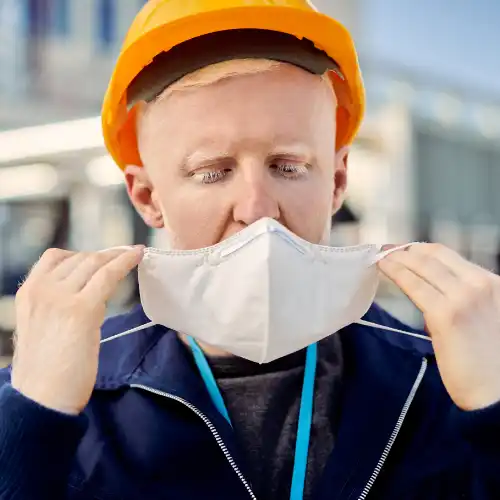
Why Properly Fitted PPE Is Now Non-Negotiable
How to Stay Compliant With 1926.134 in 2025
✔ Develop and Maintain an Active Respiratory Protection Program
Include medical clearance, hazard assessment, device selection, fit-testing, training, and storage protocols.
✔ Fit Test Every Applicable Worker
Ensure you keep hard copies or digital records of each test, device, worker, and date.
✔ Match the Right Device to the Hazard
-
Use supplied-air or SCBA for oxygen-deficient atmospheres
-
Cartridge respirators only when correct for contaminants and properly maintained
-
Disposable filtering facepieces only when acceptable by hazard assessment
✔ Inspect, Clean, and Store Properly
Create a written regimen: inspect before each use, clean after, store in sealed containers.
✔ Train and Refresh Annually
Training must cover:
-
Use, limitations, and care of respirators
-
Hazards that require respiratory protection
-
Visual inspection steps
-
Document retention and review
How Advanced Safety & Industrial Supply Helps
At Advanced Safety & Industrial Supply, we assist manufacturing, fabrication, and industrial facilities with full respiratory-protection compliance:
✅ Written program templates (customizable)
✅ On-site medical evaluations & fit-testing (qualitative and quantitative)
✅ Cartridge & filter management and alerting
✅ Cartridge-change monitoring systems
✅ Respiratory hazard assessments
✅ Training for workers and supervisors
✅ Record-keeping guidance and audit readiness
Let our team help your facility reduce citations, prevent accidents, and protect your workforce.
Call (615) 283-8794 or Contact Us now.




Why Respirator Compliance Still Lands in the Top 5 — and What You Must Do
When it comes to industrial safety, respiratory hazards often fly under the radar — unless it's too late. In FY 2025, OSHA issued 1,953 citations under 1926.134, placing Respiratory Protection firmly at #5 on the Top 10 list — despite a significant drop of 906 citations from the previous year.
For safety professionals like Steve, procurement leads like Alex, and operations managers like Pete, this violation underscores an important truth: even when respirators are supplied, the program behind them often falls short. Without fit-testing, medical evaluations, and proper documentation, you’re at risk.
Why Respiratory Protection Is Still a Major OSHA Target
Here are the recurring issues OSHA finds during inspections:
✅ No Written Respiratory Protection Program
OSHA requires a formal program that includes:
-
Medical evaluations
-
Fit testing (qualitative or quantitative)
-
Training on use, limitations, and maintenance
-
Periodic evaluation of program effectiveness
If your site has respirators but lacks this program, you're prone to citation.
✅ Missing or Expired Fit Testing
Fit testing must occur:
-
Before first use
-
Annually
-
When the device changes
Many employers skip this step or lack documentation.
✅ Using the Wrong Respirator for the Hazard
Examples:
-
Using filtering facepieces (N95) in environments with oxygen deficiency
-
No supplied-air respirator in spray applications
-
Elastomeric cartridges past their service life
A mismatch = immediate citation.
✅ Poor Maintenance & Storage
Issues include:
-
Dirty, damaged, or missing parts
-
Expired cartridges
-
No cleaning or inspection regimen
-
Storing respirators in dirty, damp conditions
Proper maintenance is critical to compliance.
✅ Lack of Training & Employee Understanding
Workers must know:
-
Why they need the respirator
-
How to don/doff it
-
How to inspect it
-
When to replace filters or cartridges
Training must be documented and reviewed regularly.
Why Properly Fitted PPE Is Now Non-Negotiable
How to Stay Compliant With 1926.134 in 2025
✔ Develop and Maintain an Active Respiratory Protection Program
Include medical clearance, hazard assessment, device selection, fit-testing, training, and storage protocols.
✔ Fit Test Every Applicable Worker
Ensure you keep hard copies or digital records of each test, device, worker, and date.
✔ Match the Right Device to the Hazard
-
Use supplied-air or SCBA for oxygen-deficient atmospheres
-
Cartridge respirators only when correct for contaminants and properly maintained
-
Disposable filtering facepieces only when acceptable by hazard assessment
✔ Inspect, Clean, and Store Properly
Create a written regimen: inspect before each use, clean after, store in sealed containers.
✔ Train and Refresh Annually
Training must cover:
-
Use, limitations, and care of respirators
-
Hazards that require respiratory protection
-
Visual inspection steps
-
Document retention and review
How Advanced Safety & Industrial Supply Helps
At Advanced Safety & Industrial Supply, we assist manufacturing, fabrication, and industrial facilities with full respiratory-protection compliance:
✅ Written program templates (customizable)
✅ On-site medical evaluations & fit-testing (qualitative and quantitative)
✅ Cartridge & filter management and alerting
✅ Cartridge-change monitoring systems
✅ Respiratory hazard assessments
✅ Training for workers and supervisors
✅ Record-keeping guidance and audit readiness
